How to Find Cheap Auto Insurance Quotes for High Risk Drivers: A Researcher's Guide
Learning how to find cheap auto insurance quotes for high risk drivers involves shifting your focus away from "big name" standard carriers toward non-standard insurers that specialize in higher actuarial risks. The fundamental truth is that high-risk pricing is a statistical balancing act; companies aren't judging your character, they are simply pricing the mathematical probability that you will file a claim based on your specific history. To find the lowest rates, you must shop during the "sweet spot" of your renewal window and leverage telematics to prove your current safety outweighs your past record.
- •The Hidden Math Behind the High-Risk Label
- •The Blueprint for How to Find Cheap Auto Insurance Quotes for High Risk Drivers
- •The "Permanent Record" Fallacy: An Aha Moment
- ◦Why Your Selection of Coverage Limits Dictates Your Price
- •Using Technology to Prove You Aren't Actually High Risk
- ◦The Role of the SR-22 and How It Affects Quotes
- •The Strategy of "Micro-Shopping"
- •Finding the Right Balance
- ◦Frequently Asked Questions
If you’ve recently dealt with a DUI, a series of speeding tickets, or a frustrating lapse in coverage, you probably already know that traditional insurance shopping feels like hitting a brick wall. We’ve spent a significant amount of time analyzing the "underwriting black box" to understand why two drivers with the same record get wildly different quotes. Our goal is to pull back the curtain on how these companies view you, so you can stop overpaying for your "mistakes" and start rebuilding your profile as a preferred driver.
The Hidden Math Behind the High-Risk Label
When we talk about being a "high-risk" driver, it’s easy to feel like you’ve been branded with a scarlet letter. But from our observations, the insurance industry doesn't see "good" or "bad" people—they see data points. An insurance company is essentially a giant math machine. They look at your age, your zip code, your credit score (in most states), and your driving record to predict how much money you might cost them in the future.
If you have a DUI or a major at-fault accident, the machine flags you as a high-probability claimant. Standard companies like State Farm or Allstate often have strict "risk appetites." If your data falls outside their comfort zone, they’ll either deny you coverage or quote you a "go away" price—a premium so high they assume you won’t take it. This is why understanding Expert Guide to Getting an Auto Insurance Quote High Risk is so vital; you need to know which companies actually want your business.
There are also "hidden" risks that many drivers don't realize they have. For example, a lapse in coverage—even for just a week—can signal to an insurer that you are financially unstable or, worse, that you were driving without insurance. We often see drivers who are shocked to find their rates doubled simply because they forgot to pay a bill and let their policy cancel for a few days. In the eyes of the insurer, you’ve reset your "continuous insurance" clock, which is a major factor in pricing.
The Blueprint for How to Find Cheap Auto Insurance Quotes for High Risk Drivers
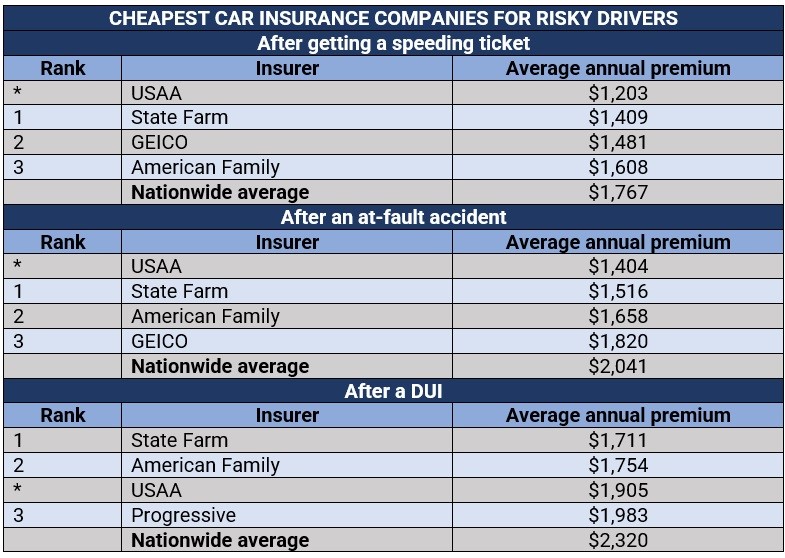
The secret to finding a deal when your record is messy isn't just about looking at more websites; it's about looking at the right websites. You have to move into the "non-standard" market. These are companies like The General, Bristol West, or Dairyland. They aren't trying to insure the soccer mom with a perfect record and a minivan; they are built specifically to handle drivers with SR-22 requirements, multiple tickets, or poor credit.
To get the best results, we recommend a three-pronged approach. First, you need to gather your data. Have your VIN, your driver's license number, and the exact dates of any past incidents ready. Second, you should use an independent agent. Unlike "captive" agents who only sell one brand, independent agents can scan dozens of non-standard carriers simultaneously. Third, you need to time your search. Most insurers offer a "continuous coverage" discount if you shop for a new policy while your current one is still active—ideally 7 to 10 days before it expires.
Because the market for high-risk coverage is so volatile, prices can fluctuate monthly. A company that was expensive for you in January might have changed its internal pricing algorithm by June. This is why we tell people that "loyalty" to an insurance company often costs you money when you're in the high-risk pool. You should be re-quoting your policy every six months like clockwork.
The "Permanent Record" Fallacy: An Aha Moment
One of the biggest misconceptions we encounter is the belief that once you are labeled high-risk, you are stuck there forever. Many drivers assume that a DUI or a major accident stays on their insurance record for life. This simply isn't true, and understanding this "knowledge gap" can save you thousands of dollars over a few years.
In most states, insurance companies only look back three to five years for accidents and tickets. For a DUI, it might be five to ten years depending on the carrier and state law. The "aha" moment comes when you realize that your high-risk status has an expiration date. If your major accident happened three years ago today, your premium could potentially drop by 30% or more tomorrow—but only if you ask or switch companies. The insurance company isn't going to call you to say, "Hey, your accident fell off our record, here’s a discount!" You have to be the one to trigger that re-evaluation.
Some companies weigh recent history more heavily than older history. An accident from 29 months ago carries less "weight" than one from two months ago. If you are struggling to find cheap auto insurance, you should specifically ask agents which carriers in their portfolio have the shortest "look-back" periods. Some might only care about the last 36 months, while others look at 60. That two-year difference is the gap between a $400 monthly premium and a $150 one.
Why Your Selection of Coverage Limits Dictates Your Price
When you're trying to figure out how to find cheap auto insurance quotes for high risk drivers, the easiest lever to pull is your coverage limit. But it’s a double-edged sword. If you’re already paying a "risk penalty" because of your driving record, you might be tempted to drop down to "state minimum" liability limits.
While this will absolutely give you the lowest possible monthly quote, it can backfire. If you have any assets at all—a home, savings, or even a steady paycheck—state minimums (which can be as low as $15,000 in some states) won't protect you if you cause a serious accident. However, for many high-risk drivers, the goal is simply to stay legal so they can get to work and eventually improve their record. In that case, starting with a "Basic" or "Economy" plan is a valid stepping stone. Just remember that once your record clears up, you should raise those limits back to a safer level.
| Risk Factor | Financial Impact | The "Workaround" Strategy |
|---|---|---|
| DUI / DWI | 70% - 100% Increase | Shop non-standard carriers; wait for the 3-5 year mark. |
| At-Fault Accident | 20% - 40% Increase | Use telematics to prove safe driving habits now. |
| Poor Credit Score | Varies by State | Look for "no-credit-check" insurers or states that ban the practice. |
| Coverage Lapse | 10% - 25% Surcharge | Buy a "non-owner" policy if you don't have a car to maintain history. |
| Young Driver (Under 25) | High Base Rate | Good student discounts and staying on a parent's policy. |
Using Technology to Prove You Aren't Actually High Risk
We live in an era where data can be your best friend. Telematics—those little plug-in devices or smartphone apps that track your braking, speed, and cornering—are the "great equalizer" for high-risk drivers. If you have a bad record because of a mistake you made two years ago, but you currently drive like a cautious grandmother, telematics allows you to prove it.
Programs like Progressive’s Snapshot or State Farm’s Drive Safe & Save offer an immediate discount just for signing up, and a potentially massive discount at renewal if the data shows you're a safe driver. For a high-risk individual, this is the fastest way to "bypass" the traditional actuarial tables. Instead of being judged by what you did in 2022, you are being judged by how you drove this morning.
But a word of caution: if you have a lead foot or work late-night shifts (which some insurers associate with higher risk), telematics might actually work against you. We’ve seen cases where drivers lost their "safe driver" status because they frequently drove between midnight and 4:00 AM. Always read the fine print of the telematics program to see what specific behaviors they are tracking.
The Role of the SR-22 and How It Affects Quotes
If the court or the DMV has told you that you need an SR-22, don't panic. One of the most common points of confusion we see is people thinking an SR-22 is a type of insurance policy. It isn't. It’s simply a piece of paper (a certificate of financial responsibility) that your insurance company files with the state to prove you have active coverage.
The "cost" of an SR-22 is usually just a small filing fee ($15–$25). The real cost is the underlying insurance policy. Because you need an SR-22, you are automatically categorized as high-risk. If you don’t own a car but need to keep your license, you can look for a "non-owner SR-22 policy." This is often the cheapest way to satisfy the state's requirements without paying for full vehicle coverage. You can learn more about these specific scenarios in our Where to Find Auto Insurance Quotes for Bad Drivers Safely guide.
The Strategy of "Micro-Shopping"
Most people shop for insurance once a year, or even once every few years. If you are a high-risk driver, you should be "micro-shopping." This means checking rates every time a minor ticket falls off your record or every time your credit score improves by 20 points.
We’ve observed that many drivers stay with a high-risk carrier for years after their record has cleared, essentially paying a "laziness tax." Once you have 12 to 24 months of clean driving and continuous coverage under your belt, you might suddenly qualify for a standard or "preferred" carrier again. The difference in price can be staggering—sometimes as much as $1,000 a year.
Don't just look at the monthly premium, either. Look at the total cost of the policy including fees. Some high-risk carriers charge high "installment fees" if you pay monthly. If you can scrape together the cash to pay for six months upfront, you might save an additional 10% to 15%. It’s these small, structural changes to how you buy insurance that add up to significant savings.
Finding the Right Balance
At the end of the day, finding cheap insurance when you’re high-risk is about persistence and a bit of humility. You have to accept that for a year or two, your rates are going to be higher than you’d like. But by using the strategies we’ve discussed—shopping non-standard carriers, using telematics, and keeping a hawk-eye on your "look-back" dates—you can minimize the damage.
Insurance is a cyclical industry. Companies change their minds about who they want to insure all the time. Your job is to stay "in the game" by maintaining continuous coverage, no matter how basic the policy is. Every month of clean driving is a step toward a lower premium. It’s a marathon, not a sprint, and the "finish line" is a return to those low, boring, standard rates that everyone else takes for granted.
Frequently Asked Questions
Does checking multiple quotes hurt my credit score? No. When insurance companies check your credit, it is considered a "soft pull," which does not impact your credit score. You can shop as much as you want without worrying about your rating.
Can I get insurance if I’ve been denied by multiple companies? Yes. If every private company denies you, every state has an "assigned risk" pool. This is a state-mandated program that ensures every driver can get coverage, though it is usually the most expensive option available.
How long does a DUI affect my insurance rates? Generally, you’ll see a significant impact for 3 to 5 years. However, some premium carriers may look back as far as 10 years. It’s important to ask each company about their specific "look-back" period.
Is "The General" actually good for high-risk drivers? Companies like The General and Progressive are often very competitive for high-risk drivers because they have sophisticated systems for pricing risk. They aren't always the "cheapest," but they are often the most likely to offer a policy when others say no.
Post a Comment