Expert Guide to Getting an Auto Insurance Quote High Risk: A Strategic Roadmap
Our Expert Guide to Getting an Auto Insurance Quote High Risk focuses on navigating the non-standard market for drivers with less-than-perfect records. To get a quote, you must identify specialized carriers, prepare your driving history, and potentially file for an SR-22 to prove financial responsibility.
- •Decoding the Non-Standard Market: Why You’re Labeled
- •The Expert Guide to Getting an Auto Insurance Quote High Risk: Our Proven Strategy
- •The Great Misconception: Why High Risk Doesn't Mean High Cost Forever
- •What Actually Triggers a High-Risk Designation?
- •Understanding the Non-Standard Insurance Landscape
- •Risk Category Breakdown
- •Telematics: The High-Risk Driver's Secret Weapon
- •State-Mandated Solutions: When All Else Fails
- •Financial Moves to Lower Your High-Risk Premium
- •Navigating the Quote Process Without the Stress
- •Strategic Moves for an Expert Guide to Getting an Auto Insurance Quote High Risk
- •Reflecting on the Path Forward
- ◦Frequently Asked Questions
We've spent years tracking how insurers treat "risky" drivers, and the truth is often more flexible than the scary letters from your current provider suggest. This guide breaks down the specific steps to find coverage when standard companies say no, offering a clear path to lower rates and better protection.
Decoding the Non-Standard Market: Why You’re Labeled
When we talk about being "high risk," it’s easy to feel like you’ve been blacklisted from the road. But in the insurance world, it’s just a math problem. Actuaries—the people who sit behind desks crunching numbers—use your past behavior to predict the likelihood of a future claim. If you’ve had a DUI, a series of speeding tickets, or even a gap in your coverage because you were traveling or forgot to pay a bill, you’re moved from the "standard" bucket into the "non-standard" bucket.
The non-standard market isn't a dark corner of the industry; it’s a massive, multi-billion dollar sector. Companies like The General, Bristol West, and Dairyland thrive here. They aren't looking for perfect drivers; they’re looking for people who are willing to pay a bit more to prove they can be responsible again. Based on our observations, the biggest mistake drivers make is trying to force themselves back into a standard company like State Farm or Geico too soon. If those companies have already said no, banging on their door won't change the algorithm. You have to go where you're wanted.
Understanding this distinction is the first step in our Expert Guide to Getting an Auto Insurance Quote High Risk. You aren't looking for the "best" insurance company in the country; you’re looking for the best company for your specific situation. Some companies specialize in DUI cases, while others are more lenient with young drivers or those with poor credit scores. Knowing which lane to pick saves you hours of frustration.
The Expert Guide to Getting an Auto Insurance Quote High Risk: Our Proven Strategy
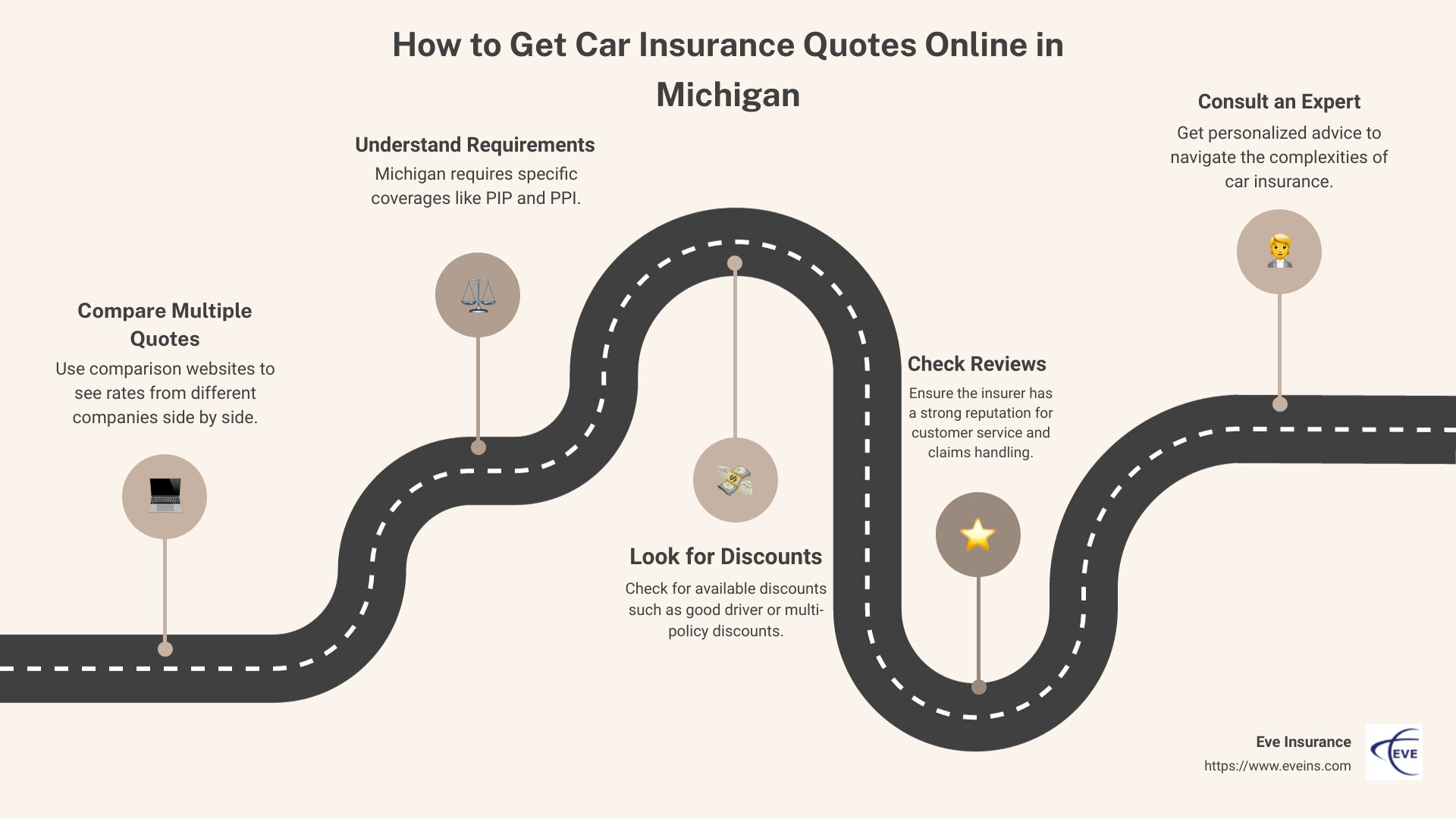
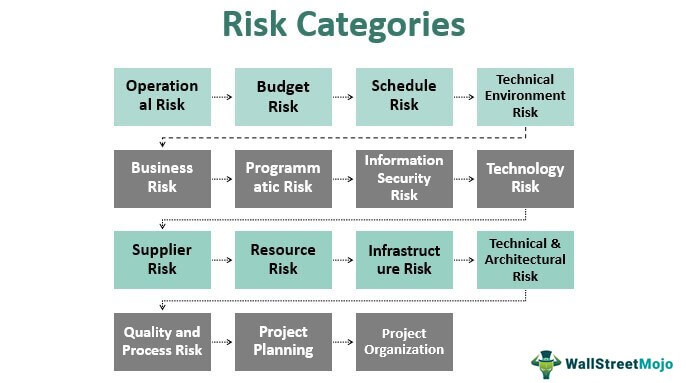
Getting a quote when you’re high risk requires a bit more legwork than the average "15 minutes could save you 15%" commercial suggests. You can't just type your name into a website and expect a miracle. You need a strategy that addresses your specific red flags head-on. We recommend starting with a full audit of your own record before you even talk to an agent.
First, get a copy of your Motor Vehicle Record (MVR) from the DMV. Why? Because insurance companies are going to see it anyway, and you need to know exactly what they’re seeing. Sometimes, an old ticket that should have fallen off is still lurking there, or a minor fender-bender is coded incorrectly. When you have the facts, you can speak confidently to an agent. When you're ready to start looking, knowing how to find cheap auto insurance quotes for high risk drivers can save you thousands over the life of a policy.
Next, identify the specialized carriers. You can start by looking at an auto insurance quote from specialized carriers that cater specifically to non-standard drivers. These companies have different underwriting "appetites." For example, one might be okay with a single DUI but will reject you for three speeding tickets. Another might ignore your credit score entirely but charge a premium for a lapse in coverage. It’s all about finding the right fit for your specific "risk" profile.
Gathering Your Paperwork for an Expert Guide to Getting an Auto Insurance Quote High Risk
Before you sit down to request quotes, have your documents ready. This isn't just about your name and address. You’ll need your Social Security number (for the credit check, which most states allow), your driver’s license number, and the VIN for every vehicle you want to insure. To ensure you aren't overpaying, it's vital to learn how to get an accurate auto insurance quote by VIN number, as vehicle safety features can offset personal risk factors.
The VIN is particularly important for high-risk drivers. If you’re driving a car with high-end safety features—like lane-assist, automatic emergency braking, or a high crash-test rating—the insurance company might give you a break. They see the car as a partner in keeping you safe, which lowers the overall risk of a payout. Don't just tell them you drive a "Honda Civic"; give them the exact VIN so they can see the trim level and safety package.
The Great Misconception: Why High Risk Doesn't Mean High Cost Forever
Here is the "aha" moment we promised: The "high risk" label is not a life sentence. Many drivers assume that once they’ve had a major incident, they are stuck with $500 monthly premiums for the rest of their lives. That’s simply not true. In most states, insurance companies only look back three to five years for standard violations and maybe seven to ten years for major ones like a DUI.
The misconception is that you have to wait for that time to pass before your rates go down. In reality, your "risk score" is a sliding scale. Every six months that you go without a new ticket or a claim, you become slightly less risky in the eyes of the insurer. We often see drivers who check back every six months and find their premium dropping by 10% or 15% each time. You don't have to wait five years for the "magic" to happen; you just have to prove a new pattern of behavior.
Another part of this myth is that "bad drivers" are the only ones in this category. An overlooked detail our team often encounters is that a "lapse in coverage" can be just as damaging as a reckless driving charge. If you sold your car and didn't have insurance for six months, and then you try to buy a new policy, you are statistically more likely to have an accident in the first 60 days of your new policy. Insurers don't care why you had a lapse; they just care about the data. Understanding this helps you stop taking the high rates personally and start treating them as a temporary hurdle to be cleared.
What Actually Triggers a High-Risk Designation?
It’s not always a dramatic police chase that lands you in the high-risk pool. Sometimes, it’s a combination of small things that add up. Understanding these triggers helps you navigate the Expert Guide to Getting an Auto Insurance Quote High Risk more effectively because you can address the specific concerns of the underwriter.
- Major Violations: This is the obvious one. DUIs, DWIs, reckless driving, and racing. These are the "heavy hitters" that stay on your record the longest.
- Multiple Minor Violations: Three speeding tickets in two years can be worse than one major violation. It shows a pattern of habitual risk-taking.
- At-Fault Accidents: Especially if there are multiple claims in a short window. It suggests that your driving habits are leading to physical damage.
- Credit History: In many states, a low credit score is a major factor. Statistically, people with lower credit scores file more claims. It’s controversial, but it’s how the system works.
- Coverage Lapses: Being uninsured for even a few weeks makes you a "high risk" for many standard carriers.
- The "Young Driver" Factor: If you’re under 25, you’re high risk by default. Add one ticket to that, and you’re firmly in the non-standard market.
When we analyze cases like this, we find that the "why" matters less than the "what." The insurance company doesn't care that you were speeding because your wife was in labor; they just see the "85 in a 65" on the report. When getting a quote, honesty is the only policy. If you try to hide a violation, they will find it when they run your report, and they might deny you coverage altogether for "misrepresentation." Safety is a priority, so we recommend learning where to find auto insurance quotes for bad drivers safely to avoid predatory "ghost" brokers.
Understanding the Non-Standard Insurance Landscape
The companies that play in the high-risk space operate differently than the household names you see during Sunday Night Football. Standard companies want "clean" risks—drivers with no tickets, good credit, and steady jobs. Non-standard companies are more like "second chance" lenders. They expect you to have some baggage, and they’ve priced their policies to account for it.
These companies often offer more flexible payment plans. For example, a standard company might require a large down payment or the full six-month premium upfront if your credit is bad. A non-standard company might let you pay month-to-month with a smaller deposit. They also tend to be much faster at filing SR-22 forms with the state. If your license is suspended and you need an SR-22 to get it back, a non-standard company can often have that filed electronically within an hour of you paying your first premium.
However, there is a trade-off. The customer service might not be as "white-glove" as a premium carrier. You might have to wait longer on hold, or their mobile app might not be as slick. But when you’re in the high-risk category, you aren't paying for an app; you’re paying for the legal right to drive.
Risk Category Breakdown
To help you visualize where you might fall, we’ve put together a quick taxonomy of the high-risk landscape. This helps you understand what to expect when you start the quoting process.
| Driver Profile | Primary Risk Trigger | Expected Impact | Best Strategy |
|---|---|---|---|
| The "Oops" Driver | 1-2 minor tickets or 1 small accident | Moderate premium increase | Shop standard carriers with "forgiveness" programs |
| The "Lapsed" Driver | Gap in insurance coverage > 30 days | High initial rates, hard to find standard coverage | Buy a 6-month policy from a non-standard carrier to build history |
| The "Serious" Offender | DUI, Reckless Driving, or SR-22 requirement | Very high premiums, limited carrier options | Specialized high-risk insurers; focus on state compliance |
| The "Credit-Challenged" | Poor credit score (in applicable states) | Significant rate hike despite clean driving | Look for carriers that weigh credit less heavily or use telematics |
Telematics: The High-Risk Driver's Secret Weapon
If you know you’re a good driver but your record says otherwise, telematics—or usage-based insurance (UBI)—is your best friend. This is the "plug-in" or "app-based" tracking that monitors how you actually drive. It looks at your braking, your acceleration, the time of day you drive, and how much you use your phone.
For a high-risk driver, this is a way to "opt-out" of being judged solely on your past. If you’ve had a DUI but you haven't touched your phone while driving and you never speed for six months, the telematics data proves you are a changed driver. Some companies offer an immediate discount just for signing up, with the potential for a massive discount at renewal if your data is good.
But be warned: it’s a double-edged sword. If you sign up for a telematics program and continue to drive aggressively, your rates could actually go up or you could be dropped entirely. We’ve seen this happen when drivers forget the app is running and go on a spirited weekend drive. If you’re going to use this tool, you have to be committed to being a "boring" driver. Boring is cheap in the insurance world.
State-Mandated Solutions: When All Else Fails
What happens if every single company says no? It’s rare, but it happens. Usually, this occurs if you have an extremely high number of accidents or a very recent, very serious criminal conviction involving a vehicle. In these cases, you don't just stop driving; you look into the "Assigned Risk" pool.
Every state has a plan (often called an Automobile Insurance Plan) that ensures insurance is available to those who cannot find it in the voluntary market. The state essentially "assigns" you to an insurance company, and that company must cover you. The catch? It’s incredibly expensive. It’s meant to be a last resort, a safety net to keep the roads legal. If you find yourself in this position, your goal should be to stay ticket-free for one year so you can jump back into the non-standard voluntary market as soon as possible.
Financial Moves to Lower Your High-Risk Premium
While you can't change your driving record overnight, you can change your policy structure. This is a key part of our Expert Guide to Getting an Auto Insurance Quote High Risk. If the quote comes back at $400 a month and your budget is $250, you have levers you can pull.
First, look at your deductibles. If you’re driving an older car that’s paid off, consider raising your deductible from $500 to $1,000 or even $2,000. This tells the insurance company that you’re willing to shoulder more of the "small" risks, which lowers their potential payout. Just make sure you actually have that $1,000 in a savings account somewhere in case you do have an accident.
Second, evaluate your coverage limits. While we never recommend driving with only the state minimum (it’s usually not enough to cover a serious accident), you might not need "Premier" level coverage while you’re in the high-risk penalty box. You can scale back to more modest limits for a year or two until your record clears and your base rate drops.
Third, look at the car itself. If you’re high risk and you’re trying to insure a brand-new sports car, you’re fighting an uphill battle. The "Expert" move is to drive a safe, older sedan with high safety ratings. The insurance company sees a Camry as a much lower risk than a Mustang, regardless of who is behind the wheel.
Navigating the Quote Process Without the Stress
The actual process of getting the quote can be overwhelming. You’ll get phone calls, emails, and maybe even some junk mail. If you want to avoid the barrage of sales pitches, there are ways to manage the flow of information. Some people prefer to use a "burner" email address or a Google Voice number specifically for insurance shopping.
However, we’ve found that for high-risk drivers, talking to a human—specifically an independent agent—is often better than using an automated system. An independent agent works with dozens of companies, including those non-standard ones we mentioned earlier. They can "shop" your profile to ten different carriers with one phone call. More importantly, they can explain the "why" behind your record to an underwriter. Sometimes, a human touch can get a "maybe" turned into a "yes."
Strategic Moves for an Expert Guide to Getting an Auto Insurance Quote High Risk
If you’re looking to get the most accurate and lowest quote possible, timing matters. Don't wait until the day your current policy expires to start shopping. Insurers see "last-minute" shopping as a sign of instability. Ideally, start looking 14 to 30 days before you need the policy to start. Many companies offer an "advance purchase" discount that can be as high as 10%.
Also, consider "bundling," even if you don't think you have anything to bundle. Do you rent an apartment? Adding a $15-a-month renters policy can sometimes trigger a 15% discount on your auto policy. In some cases, the discount on the car insurance is larger than the total cost of the renters insurance, meaning you’re essentially getting protected for free.
Finally, be prepared to pay in full if you can. We know that high-risk premiums are expensive, but the "installment fees" and "interest" on monthly payments can add another 10-20% to your total cost. If you can swing the full six-month payment, you’ll save a significant chunk of change and prove to the insurer that you are financially stable.
Reflecting on the Path Forward
Being labeled a high-risk driver feels like a weight, but it’s really just a temporary season. The insurance industry is a massive machine built on data, and data changes every single day. Every mile you drive safely, every bill you pay on time, and every month you keep your coverage active is a data point in your favor.
We’ve seen drivers go from "uninsurable" to "preferred" in just a few years by being methodical. Use this Expert Guide to Getting an Auto Insurance Quote High Risk not just as a way to get a piece of paper so you can drive to work, but as a roadmap for rebuilding your financial reputation on the road. The power is in your hands—or more accurately, on your steering wheel.
Frequently Asked Questions
How long will I be considered a high-risk driver? Typically, insurance companies look at the last three to five years of your driving history. Major offenses like a DUI may impact your rates for seven to ten years depending on the state and the specific carrier’s rules.
Can I get high-risk insurance without an SR-22? Yes, unless the state or a court has specifically ordered you to file an SR-22. Not all high-risk drivers need this filing; many are in the high-risk pool simply due to credit scores, lapses in coverage, or multiple minor tickets.
Will my rates go down automatically when a ticket falls off my record? Usually, no. You often have to ask for a "re-rate" or shop for a new policy. Most insurance companies won't proactively lower your premium until your policy renewal period, and even then, they might not apply the discount unless you prompt them.
Is high-risk insurance the same as "No-Fault" insurance? No. "No-Fault" refers to how claims are paid in certain states (like Michigan or Florida), regardless of who caused the accident. High-risk insurance refers to the driver's profile and the type of company providing the coverage.
Post a Comment