A Complete Guide on How to Compare Auto Insurance Quotes: Save Hundreds Like a Pro
This A Complete Guide on How to Compare Auto Insurance Quotes is the definitive framework for evaluating policy premiums and coverage terms across multiple providers to ensure financial protection. It is a systematic process of aligning your specific risk profile with the most cost-effective underwriting pool available in the current market.
- •The Underlying Mechanics of Why Rates Vary So Much
- •Gathering Your Data Before You Start the Search
- •A Complete Guide on How to Compare Auto Insurance Quotes Using the Apples-to-Apples Method
- ◦How to Compare Auto Insurance Quotes Side by Side Effectively
- •The Loyalty Myth: Why Staying Put Might Be Costing You
- •The "Full Coverage" Fallacy and Understanding What You're Buying
- •The Role of Credit Scores and "Soft Pulls"
- •Leveraging Technology: Finding the Best Website to Quote Auto Insurance Coverage
- ◦Finding the Best Auto Insurance Quote Comparison Tool Online
- •The Telematics Revolution: Trading Privacy for Pennies?
- •The Impact of the Vehicle You Choose
- •Discounts: The Hidden "Stacking" Strategy
- •The Claims Reputation: Why Price Isn't Everything
- •When is the Best Time to Run Your Comparison?
- •Reflecting on the Value of Your Time
- ◦Frequently Asked Questions
Shopping for vehicle protection often feels like a repetitive chore, but we’ve found that most drivers leave hundreds of dollars on the table simply because they don't know how the "black box" of insurance pricing actually works. By looking at rate shopping through the lens of an actuary rather than a consumer, you can uncover hidden savings and avoid the common traps that lead to being underinsured. We want to take you behind the curtain to show you how to analyze these numbers like a seasoned pro.
The Underlying Mechanics of Why Rates Vary So Much
When we sit down to look at why one company quotes $800 for six months while another asks for $1,400 for the exact same car, it’s easy to assume someone is just trying to rip you off. But the reality is more nuanced. Every insurance company has a different "target appetite." Some companies love suburban families with minivans because their data shows that demographic rarely gets into high-speed collisions. Other companies specialize in high-risk drivers or urban dwellers who are more prone to "fender benders" but fewer total-loss accidents.
The secret sauce is the loss ratio. This is the amount of money an insurer pays out in claims compared to the premiums they collect. If a company has had a bad year with a lot of hurricane-related flood claims in your region, they might raise rates across the board to balance their books, even if you’ve never filed a claim. This is why we always suggest that a complete guide on how to compare auto insurance quotes must emphasize the timing of your search. Your personal risk hasn’t changed, but the company’s financial "mood" has.
We’ve also observed that the "big data" revolution has changed how quotes are generated. In the past, an agent might look at five or six factors. Today, algorithms analyze hundreds of data points, including your credit-based insurance score, the safety features of your specific vehicle trim, and even your education level or occupation in some states. Understanding that you are being categorized into a "risk pool" helps you realize that finding the right insurer is mostly about finding the one whose algorithm currently favors your specific life situation.
Gathering Your Data Before You Start the Search
Before you even open a browser tab, you need to have your "inventory" ready. We’ve seen too many people get frustrated halfway through a quote because they didn't have a VIN handy or couldn't remember exactly when their last speeding ticket occurred. Accuracy is paramount here because "placeholder" data will lead to a quote that changes—usually for the worse—once the company runs your official reports.
You will need the Vehicle Identification Number (VIN) for every car on the policy. While you can get a quote with just the make and model, the VIN allows the insurer to see the exact safety packages installed on your car. If your car has autonomous emergency braking or lane-keep assist, that VIN tells the insurer, and it could trigger a discount you’d otherwise miss. You also need the driver’s license numbers for everyone in the household. Yes, even that roommate who never drives your car might need to be listed or specifically excluded, depending on state law.
Finally, be honest about your annual mileage. We often see people guess "12,000 miles" because it’s the standard average. But if you’ve transitioned to a permanent work-from-home setup and you’re only driving 4,000 miles a year, your premium could drop significantly. Conversely, if you’re commuting 50 miles a day, lowballing that number could lead to a claim being denied later for "material misrepresentation."
A Complete Guide on How to Compare Auto Insurance Quotes Using the Apples-to-Apples Method
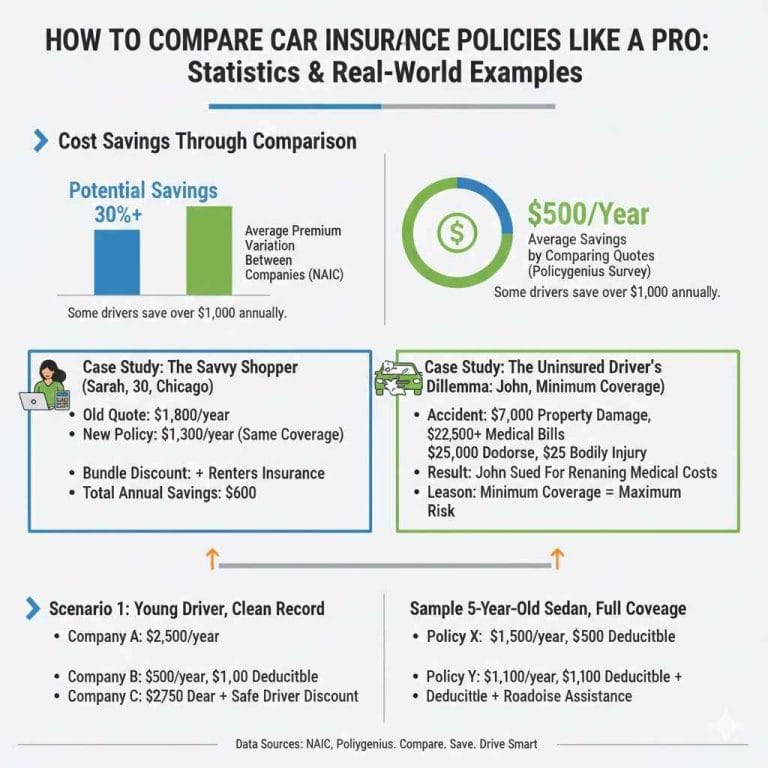
The most common mistake we see is comparing a "Basic" quote from Company A with a "Premium" quote from Company B. To get a real sense of value, you have to keep the variables constant. This means setting your liability limits, deductibles, and add-ons to the exact same levels across every platform you use.
Liability limits are usually expressed as three numbers, like 100/300/100. This translates to $100,000 for bodily injury per person, $300,000 for bodily injury per accident, and $100,000 for property damage. If you quote 50/100/50 with one company and 100/300/100 with another, the price difference isn't telling you which company is cheaper; it’s just telling you that more coverage costs more money. We recommend starting with a mid-range limit that protects your actual net worth. If you own a home or have significant savings, the state minimum coverage is almost never enough.
How to Compare Auto Insurance Quotes Side by Side Effectively
To truly understand the market, you should use a mix of tools. Start with a broad comparison site to get a "temperature check" of the market. Then, take the three lowest results and go directly to those companies' websites to refine the details. When you how to compare auto insurance quotes side by side effectively, you’ll notice that some companies include things like "Roadside Assistance" or "Glass Coverage" by default, while others charge $5 to $10 extra for them.
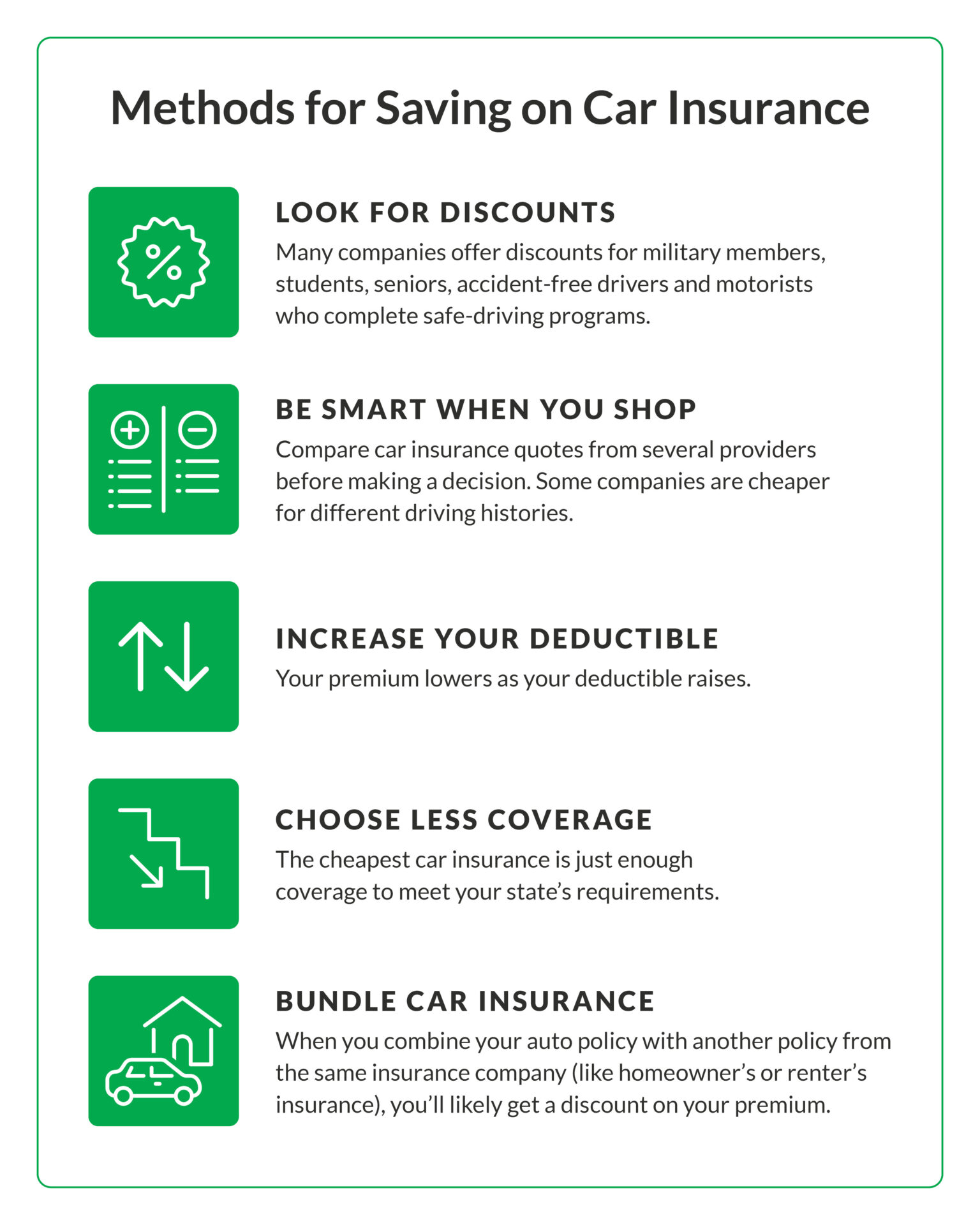
Don't ignore the deductible. This is the amount you pay out of pocket before insurance kicks in for a comprehensive or collision claim. A $500 deductible will always result in a higher premium than a $1,000 deductible. When comparing, make sure you aren't looking at a "cheap" quote that actually has a $2,500 deductible you could never afford to pay in an emergency.
The Loyalty Myth: Why Staying Put Might Be Costing You
There is a widespread misunderstanding in the insurance world that being a "loyal customer" for 10 years guarantees you the best rate. In fact, the opposite is often true. In the industry, this is known as "price optimization." Some insurers use data modeling to predict which customers are unlikely to shop around. If the algorithm determines you are a "loyalist," they may incrementally nudge your rates up over time, knowing you probably won't leave for a $50 difference.
We call this the "Loyalty Tax." While many companies do offer a small discount for staying with them, that 5% or 10% discount rarely offsets the 20% or 30% savings you might find by switching to a competitor who is currently aggressive about gaining new market share. Based on our observations, the "sweet spot" for shopping is every 12 to 24 months, or whenever a major life event occurs, such as getting married, buying a house, or improving your credit score.
This doesn't mean you should switch every six months—that can actually look "flighty" to some insurers and might affect your ability to get the best rates in the future. But you should at least check the market. If your current insurer is still the most competitive, you gain peace of mind. If they aren't, you gain extra cash in your pocket.
The "Full Coverage" Fallacy and Understanding What You're Buying
You’ll often hear people say they want "full coverage," but here’s a professional secret: "full coverage" doesn't actually exist as a legal or technical term in a policy. It’s a marketing shorthand that usually refers to a combination of Liability, Collision, and Comprehensive coverage. When you are looking for compare auto insurance options, you need to look at the individual components to see where your money is going.
Liability is the part that pays for the other person’s car and medical bills if you cause an accident. Collision pays for your car if you hit something. Comprehensive (often called "other than collision") pays for things like theft, fire, hail, or hitting a deer. An overlooked detail our team often encounters is the "Actual Cash Value" (ACV) limitation. If your car is older, you might be paying $200 a year for collision coverage on a car that is only worth $2,000. If your deductible is $1,000, the most the insurance company would ever pay you is $1,000. In that scenario, you're essentially betting $200 to maybe win $1,000. Sometimes, dropping certain coverages on older vehicles is the smartest way to "compare" and save.
| Coverage Component | What It Protects | Is It Mandatory? | Cost Impact |
|---|---|---|---|
| Bodily Injury Liability | Other people's medical bills | Yes (Most states) | High |
| Property Damage Liability | Other people's property/cars | Yes (Most states) | Medium |
| Collision | Your car (after an accident) | No (Unless financed) | High |
| Comprehensive | Theft, weather, animals | No (Unless financed) | Low-Medium |
| Uninsured Motorist | You (if hit by someone with no insurance) | Varies by state | Low |
The Role of Credit Scores and "Soft Pulls"
In almost every state (except for California, Hawaii, and Massachusetts), your credit history plays a massive role in your insurance premium. Insurers use what’s called a "Credit-based Insurance Score." This isn't the same as the score a mortgage lender looks at, but it uses many of the same factors. The logic used by actuaries is that there is a statistical correlation between how a person manages their finances and how carefully they drive.
Whether we agree with that logic or not, it’s a systemic truth of the industry. When you are comparing quotes, the good news is that these are "soft pulls." They do not hurt your credit score. You can get 50 quotes in one day and your FICO score won't budge a single point. This is a common fear that prevents people from shopping around, and we want to debunk it right now: shop as much as you want; your credit is safe.
If you know your credit score has improved by 50 or 100 points since you last signed your policy, you are almost certainly overpaying. A higher credit tier can sometimes drop a premium by 20% or more, regardless of your driving record. This is one of those "aha" moments for many drivers who realize that their financial health is just as important as their road safety when it comes to insurance costs.
Leveraging Technology: Finding the Best Website to Quote Auto Insurance Coverage
The digital landscape for insurance has exploded in the last five years. We’ve moved past the era of having to call twenty different local agents and repeat your social security number over and over. However, not all comparison tools are created equal. Some are "lead generators" that simply sell your phone number to ten different agents who will call you for weeks. Others are "real-time raters" that actually show you the final price.
Finding the Best Auto Insurance Quote Comparison Tool Online
When you are Finding the Best Auto Insurance Quote Comparison Tool Online, look for platforms that offer "direct integration." This means the site has a direct tech link to the insurance company's underwriting engine. These sites will ask for more detailed information upfront, but the price you see is much more likely to be the price you actually pay.
We also suggest looking for tools that allow you to toggle coverages on the fly. Being able to see how much your premium changes if you move from a $500 deductible to a $1,000 deductible in real-time is incredibly helpful. It allows you to find the "point of diminishing returns" where increasing your risk doesn't significantly lower your cost.
The Telematics Revolution: Trading Privacy for Pennies?
One of the newest and most aggressive ways to compare quotes is through telematics—those "plug-in" devices or smartphone apps that track your driving habits. Programs like Progressive's Snapshot, State Farm's Drive Safe & Save, or Allstate's Drivewise are becoming the default for many new policies.
Based on our research, these programs can be a double-edged sword. If you are a "low-mileage" driver who doesn't drive at 2:00 AM and never slams on the brakes, you can see massive discounts—sometimes up to 30% or 40%. But if you have a heavy foot or a long commute in stop-and-go traffic, these programs might actually result in a "surcharge" or simply a very small discount that isn't worth the privacy trade-off.
When you are comparing quotes, always ask if the price includes a telematics discount. Sometimes a quote looks cheaper only because it assumes you will be an "A+ driver" on their app. If you don't plan on using the app, make sure you compare the "base" rate instead.
The Impact of the Vehicle You Choose
We often encounter people who are shocked that their insurance went up when they traded a five-year-old luxury sedan for a brand-new economy hatchback. You’d think the cheaper car would be cheaper to insure, right? Not necessarily. Insurance companies look at the "cost of repair" and the "likelihood of theft."
A brand-new economy car might have high-tech sensors in the bumper that cost $3,000 to replace after a minor tap. Meanwhile, parts for that five-year-old luxury car might be plentiful in salvage yards, making it cheaper to fix. Some vehicles are simply "magnets" for claims. If you drive a car that is statistically popular with car thieves or frequently involved in high-speed crashes (looking at you, sports coupes), you will pay a premium for that "statistical baggage."
Before you buy a new car, we always recommend running a "mock quote." Most insurers allow you to add a "replacement vehicle" to your current policy online just to see the price difference. It’s a five-minute check that could save you from a "sticker shock" premium later.
Discounts: The Hidden "Stacking" Strategy
Most people know about the "multi-policy" or "bundling" discount. Yes, putting your home and auto together usually saves you money. But we’ve found that "stacking" smaller, lesser-known discounts is where the real magic happens. When you are going through the quote process, look for these specific triggers:
- Affinity Groups: Are you an alumni of a specific university? A member of a credit union? A teacher or a first responder? Many companies have "affinity" partnerships that offer a flat 5-10% discount.
- Payment Methods: Paying your 6-month premium in full usually saves you the "installment fees," which can add up to $50 or more over the term. Also, "Paperless" and "EFT" (automatic withdrawal) discounts are almost universal now.
- Safety Features: Beyond just airbags, things like "Passive Anti-Theft" systems or even "Daytime Running Lights" can shave a few dollars off.
- Education: If you have a student on your policy with a B average or higher, the "Good Student Discount" is one of the largest available in the industry.
The Claims Reputation: Why Price Isn't Everything
We’ve spent a lot of time talking about how to find the lowest price, but we have to be honest: a cheap policy is a liability if the company doesn't pay out when you actually need them. When we analyze cases of "insurance regret," it usually happens at the moment of a claim.
Before you sign on the dotted line with a company you’ve never heard of, check their AM Best rating. This is a grade of their financial stability. You want a company with an "A" rating or better, ensuring they have the cash reserves to pay out in a major catastrophe. Also, look at JD Power’s annual claims satisfaction surveys. Some companies are famous for their "frictionless" claims process via an app, while others might make you wait weeks for an adjuster to look at your car.
A Complete Guide on How to Compare Auto Insurance Quotes must remind you that you are buying a legal contract for future service. If that service is poor, the $20 you saved every month won't feel like a win when you're stranded on the side of the road or fighting an adjuster over the value of your totaled car.
When is the Best Time to Run Your Comparison?
Timing is everything. Most people shop when their renewal notice arrives, but that’s actually the "last minute." We suggest starting your search about 30 days before your current policy expires. Many companies offer an "Early Bird" or "Advance Quote" discount if you sign up at least 7 to 14 days before the policy starts. They view people who shop in advance as "responsible" and "low-risk," whereas people who shop on the day their insurance expires are statistically more likely to file claims.
Also, consider shopping after any major life change. Did you recently get married? (Married drivers are statistically safer and get lower rates). Did you move to a new zip code? (Even moving two miles away can change your "territory" rating). Did you pay off your car loan? (You might want to adjust your coverage now that a bank isn't dictating your limits).
Reflecting on the Value of Your Time
At the end of the day, comparing auto insurance isn't about finding a "magic" number; it’s about understanding the value of the protection you’re purchasing. We’ve seen the industry evolve from paper charts to complex AI-driven models, but the fundamental truth remains: the more information you provide and the more consistently you compare, the less likely you are to be the one subsidizing everyone else's lower rates.
It’s worth reflecting on the fact that insurance is one of the few products where the price can vary by 100% for the exact same level of service, depending entirely on which company is looking at you. By taking an hour once a year to run through the steps we’ve outlined, you aren't just "saving money"—you're taking control of a significant part of your annual household budget.
Frequently Asked Questions
Does checking quotes hurt my credit score? No. Insurance companies use a "soft pull" of your credit report, which does not affect your credit score or show up to other lenders.
Can I switch insurance companies in the middle of my policy? Yes. You can switch at any time. Your current insurer is legally required to refund the "unearned premium" for the remaining days of your policy, though some may charge a small "short-rate" cancellation fee (usually around $25-$50).
What is the most important coverage to have? While state laws vary, Liability coverage is the most critical because it protects you from lawsuits that could bankrupt you. We always recommend carrying more than the state minimum.
Is it better to use an agent or buy online? Buying online is often faster and allows for easy comparison. However, an independent agent can sometimes find "niche" companies that don't advertise nationally but offer great rates for specific drivers.
Post a Comment