Understanding Your Auto Insurance Policy Declaration Page Details
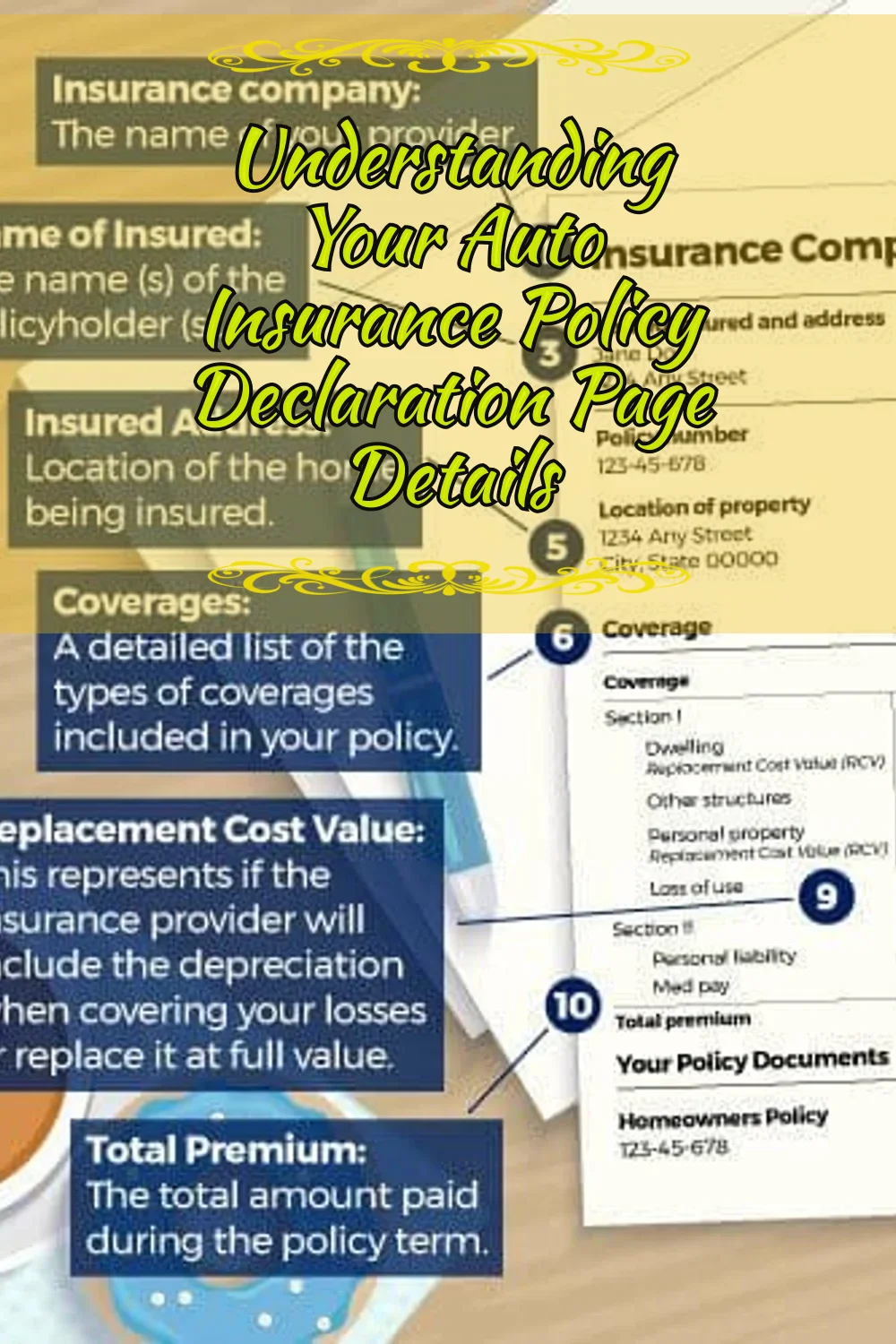
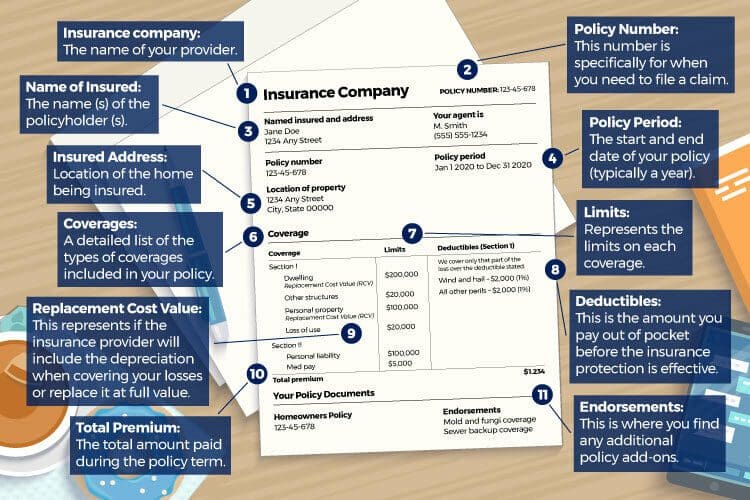
Understanding Your Auto Insurance Policy Declaration Page Details is the process of reviewing the single-page summary—often called the "Dec Page"—that outlines your specific coverage limits, deductibles, and premiums. It serves as the definitive snapshot of your insurance contract, condensing a complex legal document into a scannable record of who and what is protected.
- •Decoding the Layout: Understanding Your Auto Insurance Policy Declaration Page Details
- •The "Full Coverage" Myth: What Your Summary Actually Reveals
- •A Quick Reference for Common Dec Page Terms
- •The Financial Breakdown: Premiums, Fees, and Discounts
- •Understanding Your Auto Insurance Policy Declaration Page Details for Claims and Legal Proof
- •Hidden Details: Endorsements and Exclusions
- •Reflecting on Your Policy Health
- ◦Frequently Asked Questions
Think of this document as the "CliffsNotes" for your car insurance. While the full policy packet is dense with legal jargon, this summary highlights the numbers that actually affect your wallet and your protection on the road. We’ve spent years analyzing these documents, and we’ve found that most drivers overlook tiny errors here that could lead to denied claims or overpayment, making this guide essential for your financial health.
Decoding the Layout: Understanding Your Auto Insurance Policy Declaration Page Details
When we sit down to review a policy with someone, the first thing they usually notice is the sheer amount of data packed into one page. It can feel overwhelming, but there is a logical flow to how insurers organize this information. At the very top, you’ll find the "header" information. This includes your policy number, the policy period (the exact dates and times your coverage starts and ends), and your named insureds.
An overlooked detail our team often encounters is the "garaging address." This is where the car is physically parked most of the time. If you moved and updated your mailing address but forgot to change your garaging address, you might be paying the wrong rate—or worse, facing a claim investigation later. The Dec page is your first line of defense against these administrative hiccups.
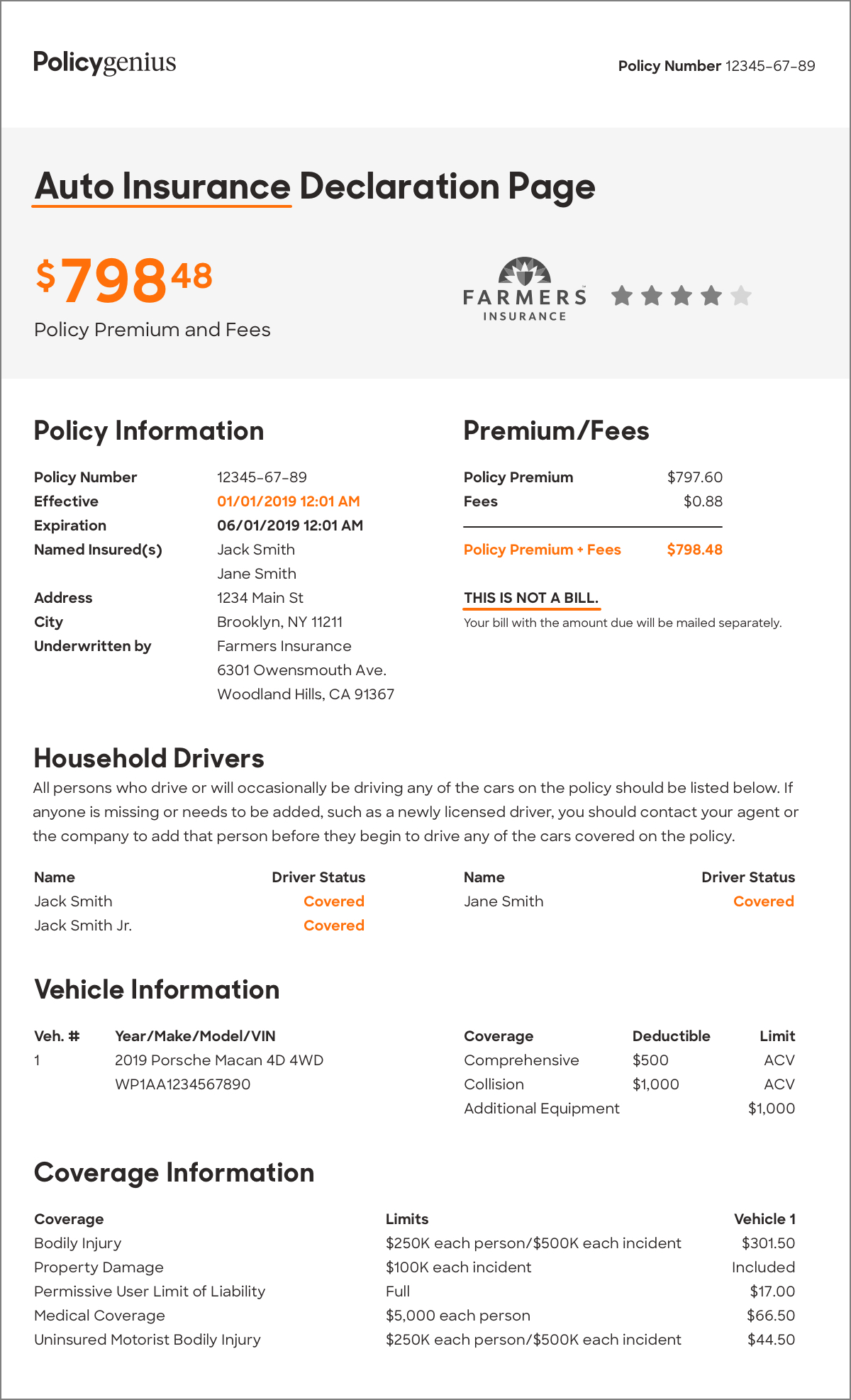
As we move down the page, you’ll see the "Schedule of Covered Vehicles." This section lists the year, make, model, and the 17-digit Vehicle Identification Number (VIN) for every car on the policy. We always recommend double-checking the VIN. A single transposed digit can lead to an incorrect premium calculation because the insurance company’s software might think you’re driving a more expensive trim level than you actually own. It’s also where you’ll see the "Loss Payee" or "Lienholder" listed if you have a car loan or lease.
Why the Dec Page is the Key to Understanding Your Auto Insurance Policy Declaration Page Details
The meat of the document is the "Coverages and Limits" section. This is where the abstract idea of "insurance" becomes concrete numbers. For each vehicle, you will see a list of coverages—like Bodily Injury Liability, Property Damage Liability, and Collision—alongside a dollar amount. These dollar amounts are your "limits," which represent the maximum the insurance company will pay out for a covered loss.
If you see numbers like 100/300/50, those are "split limits." The first number is the maximum payout for one person's injuries, the second is the total for all injuries in one accident, and the third is for property damage. Understanding these specifics is a big part of A Complete Guide on How Auto Insurance Policies Work because it shows exactly where your protection stops and your personal financial liability begins.
The "Full Coverage" Myth: What Your Summary Actually Reveals
One of the most frequent conversations we have involves the term "full coverage." We often hear people say, "I'm not worried, I have full coverage." But here is the reality: "full coverage" does not exist as a legal or technical term in the insurance world. It is a colloquialism that usually just means you have both liability insurance and physical damage coverage (comprehensive and collision).
When you are understanding your auto insurance summary, you’ll see that your "full coverage" is actually a specific menu of choices. For example, you might have collision coverage, but if your deductible is $2,500, you are essentially self-insuring for any damage below that amount. If you don't have "Rental Reimbursement" or "Towing and Labor" listed on your Dec page, you don't have those protections, regardless of whether you think you have "full coverage."
This is the "aha" moment for many: the Declaration Page proves that your policy is a modular product. You can add or remove pieces like Lego bricks. If a specific coverage isn't listed with a premium price next to it on your Dec page, you simply do not have it. This is why we tell everyone to ignore the marketing terms and look only at the line items on this specific sheet.
A Quick Reference for Common Dec Page Terms
To help you scan your document more effectively, we’ve put together this breakdown of the core elements you’ll encounter.
| Term | What It Represents | Action Item |
|---|---|---|
| Policy Period | The exact dates of coverage. | Check for gaps between old and new policies. |
| Deductible | Your out-of-pocket cost per claim. | Ensure you have this much in your savings account. |
| Liability Limits | The max the insurer pays others. | Compare this to your total net worth. |
| Endorsements | Add-ons like Gap Insurance. | Verify these match your specific needs (e.g., new car). |
| Premium | The cost for that specific coverage. | Use this to compare value between different carriers. |
The Financial Breakdown: Premiums, Fees, and Discounts
The bottom half of the page is usually where the math happens. You’ll see the total premium for the policy term, but it’s often broken down by vehicle and by coverage. This is incredibly useful for seeing exactly what is driving your costs. Is your teenager’s car costing three times as much as yours? The Dec page will show you the exact "Driver Assignment" or "Risk Rating" that explains the price difference.
We also pay close attention to the "Discounts" section. Most insurers list the specific credits they’ve applied to your account, such as "Multi-Policy," "Safe Driver," or "Anti-Theft Device." If you’ve recently installed a dashcam or a vehicle recovery system and don't see a corresponding discount, you’re leaving money on the table. Based on our observations, companies don't always automatically apply every discount you qualify for; you often have to ask for them and then verify they appear on your next updated Dec page.
It’s also worth noting the "Fees" section. Some states allow insurers to charge an installment fee if you pay monthly rather than in full. While it might only be $5 or $10, seeing it spelled out on the summary can help you decide if it's worth paying the entire premium upfront to save that extra $60 to $120 a year.
Understanding Your Auto Insurance Policy Declaration Page Details for Claims and Legal Proof
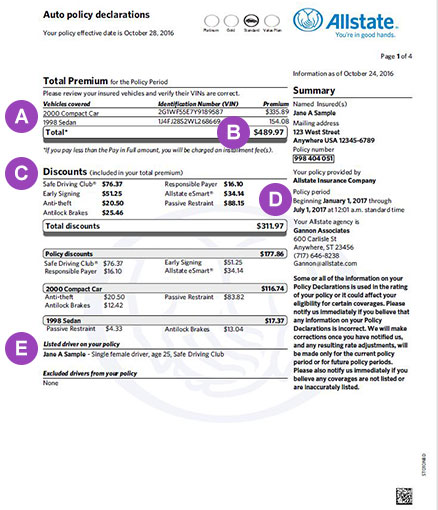
If you are ever in an accident, the Dec page is the most important document you own. While you might have a small ID card in your glove box, that card only proves you have insurance. It doesn't tell you—or the police, or the other driver’s attorney—what your limits are. In a high-stress situation, knowing exactly where to find your policy number and your "Underinsured Motorist" limits can save you a massive amount of anxiety.
The policy number itself is a unique identifier that acts as your "account number" in the insurance ecosystem. If you’re ever unsure of yours, you can look at Common Auto Insurance Policy Number Formats by State to see if your number looks standard for your region. This number is how claims adjusters pull up your entire history, and it’s the first thing you’ll need to provide when you call the claims hotline.
We’ve also seen cases where the "Effective Date" on the Dec page became the deciding factor in a legal dispute. If an accident happens at 12:01 AM on the day your policy expires, that Dec page is the only thing that proves whether you were covered for that final minute of the day. Most policies expire at 12:01 AM on the "To" date, meaning you actually need your new policy to start on that same day to avoid a coverage gap.
Hidden Details: Endorsements and Exclusions
At the bottom or on a second page of the summary, you’ll often see a list of form numbers. These are "Endorsements" and "Exclusions." These are the "fine print" additions that modify the standard policy. For example, if you use your car for ride-sharing (like Uber or Lyft), you must see a "Ride-share Endorsement" listed here. Without it, your insurer could deny a claim if you’re in an accident while the app is on.
Another common endorsement is "Custom Equipment Coverage." If you’ve added a $3,000 stereo system or custom rims to your truck, the standard policy usually won't cover them. You have to add an endorsement, and once you do, it will appear as a line item on your Dec page with its own specific premium. If you don't see it, it's not covered.
We often tell our readers to look for "Excluded Drivers" as well. In some states, you can specifically name someone in your household who is not covered to drive your car (often to keep premiums low if that person has a bad driving record). If that person gets behind the wheel and crashes, there is zero coverage. The Dec page is where this exclusion is legally documented.
Reflecting on Your Policy Health
Taking the time to sit down with your Declaration Page is a bit like doing a financial health checkup. It’s not just about verifying numbers; it’s about ensuring that the protection you think you have actually matches the legal reality of your contract. We’ve seen far too many people discover a mistake only after a tree has fallen on their car or a fender-bender has turned into a lawsuit.
As life changes—you get married, buy a house, or your kids move out—your Dec page should change with you. It is a living document. The next time your renewal arrives in the mail (or your inbox), don't just look at the total price and file it away. Take ten minutes to walk through these details. It’s the simplest way to ensure that your "peace of mind" is backed up by actual, documented coverage.
Frequently Asked Questions
Is the Declaration Page the same as my insurance ID card? No. Your ID card is a brief proof-of-insurance for law enforcement and registration. The Declaration Page is a detailed summary of your specific coverages, limits, and costs.
How often should I receive a new Declaration Page? You should receive a new one at every renewal (usually every 6 or 12 months) and whenever you make a change to your policy, such as adding a driver or changing your deductible.
What should I do if I find a mistake on my Dec page? Contact your agent or insurance company immediately. Even a small typo in your VIN or address can impact your coverage or premium. Ask them to issue a "Revised Declaration Page" once the correction is made.
Post a Comment